ADTECH & DECISION SYSTEMS ENGINEERING

Connected signals.
Decisions with
context.

Advertising platforms, campaign tools and lead workflows—engineered around defined integrations, observable decisions and the teams running them.

Software engineering for AdTech. Clear boundaries from the start.

THE DECISION LAYERREFERENCE CONCEPT / 01
Partner requestsCampaign rulesPermitted signals
VALIDATE / EVALUATE / RESPONDDecisions,
with a defined path.
01 / PLATFORM

Response &
event record

02 / OPERATIONS

Visibility &
review

Illustrative system view—not a live bidder or campaign dashboard.

ADTECH ENGINEERING AT WEB CINCTURE

Build the platform.
Connect the operation.

Web Cincture Private Limited designs AdTech software, campaign operations tools, RTB integration workflows, event reporting and lead-routing systems. We work with teams in Delhi NCR and beyond, defining partner access, data permissions and acceptance criteria before implementation.

This is a software-engineering service. Media buying, campaign management services, creative production and advertising spend are not automatically part of the engagement.

Define your platform scope

TWO RELATED, DISTINCT SYSTEMS

An impression is not
the same as an enquiry.

RTB and lead operations may share business context, but their events, decisions and success criteria must remain distinct.

01 / REAL-TIME BIDDING

A decision about an ad impression.

Real-time bidding is an auction-based process for individual advertising impressions. Integration design considers partner request formats, decision rules, response requirements and event handling.

OpenRTB: IAB Tech Lab
02 / LEAD OPERATIONS

A workflow around an enquiry.

Lead operations begin with a captured enquiry. Validation, duplicate handling, routing, CRM updates and follow-up help teams manage the next step. A lead is not automatically a qualified opportunity or sale.

Explore the CRM context

WHAT WE ENGINEER

From signals and rules
to usable business tools.

Scope the components your business needs, whether that is a new platform, one partner integration or a focused workflow.

01 / CONFIGURE

Campaign management tools

Build interfaces for campaign configuration, rules, budgets and review workflows. Separate what operators can change from what requires approval.

Outputs: configuration tools · access roles · change history
02 / CONNECT

Partner & API integrations

Map partner contracts, authentication, request formats and error handling. Confirm sandbox access, supported versions and onboarding dependencies.

Outputs: integration contracts · adapters · test cases
03 / DECIDE

Bid-workflow engineering

Design request validation, decision rules, response handling and event records for the agreed bidding workflow and partner constraints.

Outputs: workflow components · deadline handling · validation tests
04 / UNDERSTAND

Event pipelines & reporting

Define reporting events, identifiers, data pipelines and reconciliation rules so teams understand what is measured and where discrepancies arise.

Outputs: event map · reporting views · reconciliation checks
05 / FOLLOW THROUGH

Lead validation & routing

Connect capture, field checks, duplicate rules and routing with the CRM or approved business tools. Define how retries and rejected records are handled.

Outputs: field mapping · routing rules · status workflows
06 / OPERATE

Monitoring & operational controls

Plan logs, alerts, failure visibility and operator tools around scoped performance targets and ownership. Make exceptional cases reviewable.

Outputs: monitoring plan · alerts · operating runbook

Deliverables depend on agreed requirements and access. No exchange partnership, production traffic scale or advertising return is implied.

ARCHITECTURE WITH CLEAR BOUNDARIES

Two flows.
Different decisions.

Keep bidding events and lead outcomes separate. Connect them only through explicitly defined reporting and permitted data flows.

01 / RTB INTEGRATION WORKFLOWREFERENCE MODEL
  1. 01

    Receive request

    Read the partner-defined impression request.

  2. 02

    Validate & evaluate

    Apply format checks, permitted signals and agreed rules.

  3. 03

    Respond or decline

    Return the appropriate response within partner constraints.

  4. 04

    Record & reconcile

    Handle partner events and reporting discrepancies.

A bid response does not establish that an impression was won, served or converted.

02 / LEAD OPERATIONS WORKFLOWREFERENCE MODEL
  1. 01

    Capture enquiry

    Accept the permitted fields from an approved source.

  2. 02

    Validate & deduplicate

    Check fields and apply the agreed duplicate policy.

  3. 03

    Route to the right team

    Map the record to a CRM owner or defined workflow.

  4. 04

    Follow up & update

    Record status changes and business outcomes.

Routing a lead does not establish its qualification, conversion or revenue.

Illustrative flows—not a claim of a deployed exchange, certified bidder or production integration. Protocol support is agreed per partner.

OUR PRODUCT / RELEVANT OPERATING CONTEXT

After the enquiry,
the work continues.

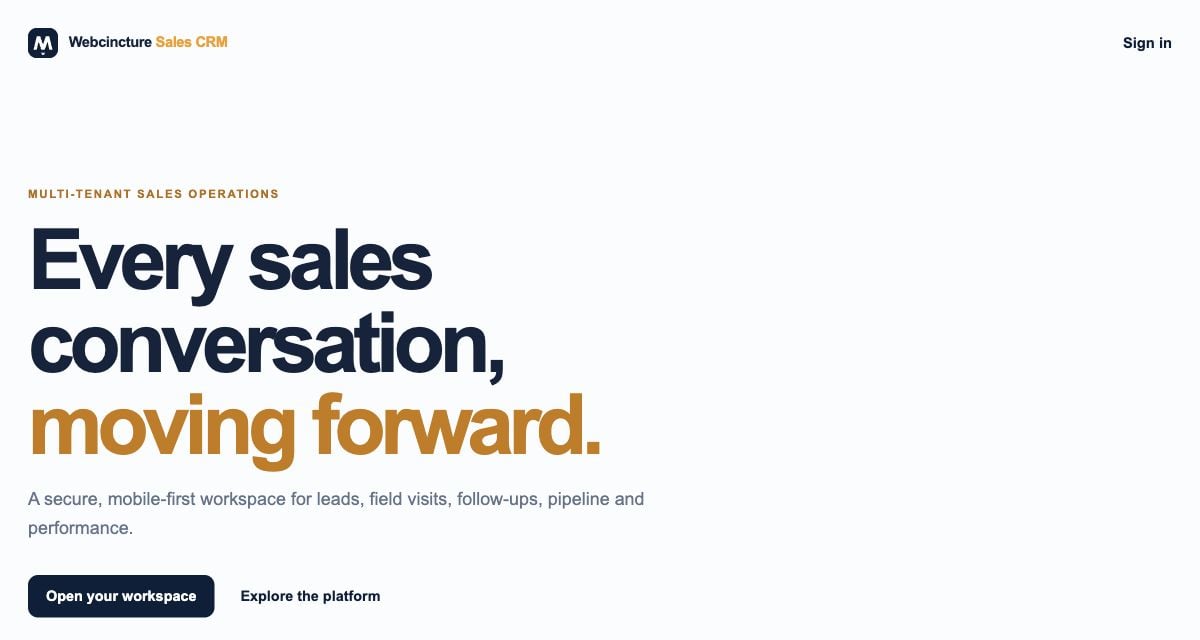
Daily Sales CRM is Web Cincture’s product for everyday sales workflows. It provides relevant business context for the teams managing lead follow-up.

crm.dailysalecrm.com Actual Daily Sales CRM public website introducing its sales workflow product
SALES & FOLLOW-UP OPERATIONS

Daily Sales CRM

Tools for managing sales records, follow-ups and the business work around an enquiry.

  • Lead and sales-workflow context
  • Team follow-up and operating visibility
  • Integration requirements scoped separately
Explore the product

Actual public website capture. This product example is not evidence of an RTB deployment, advertising exchange integration or attribution capability.

CONTROL IS PART OF THE PRODUCT

Make the decisions
inspectable.

Data movement, integration access and operating responsibilities need to be explicit—not hidden behind a dashboard.

DESIGN PRINCIPLE

Defined inputs.
Traceable actions.
Reviewable exceptions.

01

Permitted data & access

Review consent requirements, permitted identifiers, retention and access roles with the client. Limit data flows to the agreed purpose; legal compliance requires its own review.

02

Partner & performance boundaries

Document protocol versions, API limits, response deadlines and expected load. Validate against an agreed test plan rather than claiming universal latency or scale.

03

Reporting & reconciliation

Define event names, source ownership, deduplication and late-arriving data. Keep requests, responses, served impressions, leads and sales distinct.

04

Failure handling & human review

Plan timeouts, retries, duplicate protection, rejected-record queues and escalation. Assign incident ownership and support windows in the operating agreement.

FROM REQUIREMENTS TO OPERATING READINESS

Prove the path.
Then expand the scope.

Begin with a bounded component or integration. Validate the data, behaviour and operational requirements before extending the platform.

  1. 01 / DISCOVER

    Map the landscape

    Review users, partner access, existing software, permitted data and product boundaries.

    Scope & dependency register
  2. 02 / DESIGN

    Define the contracts

    Agree workflow rules, events, integration formats and measurable acceptance checks.

    Architecture & test plan
  3. 03 / VALIDATE

    Build & exercise

    Implement the scoped system; test load, failure handling and record reconciliation.

    Test evidence & known limitations
  4. 04 / HAND OVER

    Release with ownership

    Complete the agreed release, access handover and operating walkthrough.

    Runbook & support boundaries

QUESTIONS, ANSWERED

Before you build
the decision layer.

Practical answers about RTB, lead workflows, partner access and engineering scope.

Discuss your requirements
What AdTech engineering services does Web Cincture offer?

Web Cincture designs campaign management tools, partner and API integrations, bid-workflow components, event reporting, lead validation and routing, and operational controls. Each engagement defines the product scope, partner access, data permissions and acceptance tests before implementation.

What is the difference between RTB and lead generation?

Real-time bidding concerns an auction for an individual advertising impression. Lead generation concerns capturing and processing an enquiry, including validation, routing and follow-up. A business may connect their reporting, but a bid response is not the same as a lead or a completed sale.

Is this advertising campaign management or software development?

This service is software and platform engineering: building tools, integrations, workflows and reporting systems. Media buying, creative production, campaign operation and advertising spend are not automatically included; any such services require a separate agreed scope.

Can you integrate OpenRTB or an advertising partner API?

An integration can be scoped after reviewing the partner specification, supported protocol version, authentication, sandbox access and production approval requirements. Partner accounts and permissions must be available. This page does not claim exchange membership, provider certification or a pre-approved integration.

Can leads be connected with our CRM?

CRM integration can include agreed field mapping, validation, duplicate-handling rules, routing, status updates and retry behaviour. The available API, permitted data, account access and the business owner for each workflow are reviewed before implementation.

How are performance and reporting requirements agreed?

The project defines expected request volumes, partner deadlines, reporting events and test conditions. Load, failure and data-reconciliation tests are agreed for that scope. No universal latency, throughput, attribution accuracy or advertising return is guaranteed.

How are privacy, data access and fraud risks handled?

The design reviews permitted data, consent requirements, retention, access roles, audit records and vendor responsibilities with the client. Validation and monitoring controls are scoped to the use case. These controls do not imply blanket legal compliance, guaranteed identity accuracy or fraud-free traffic.

What determines the cost and timeline of an AdTech project?

Cost and timeline depend on the product boundaries, partner onboarding, request volumes, data sources, reporting needs and acceptance tests. Implementation, infrastructure, vendor subscriptions, advertising spend and ongoing support are separated in the proposal where applicable. Delivery starts with a scoped discovery discussion.

LET’S DEFINE THE NEXT DECISION

Your platform ambition.
A clear engineering path.

Tell us what you want to build, which systems need to connect and what partner access is available. Please do not submit credentials or personal audience records.